
EUROPEAN VASCULITIS PATIENT SUMMIT 2025
patient advocacy in a new era
In mid-November, a vibrant group of vasculitis patients, caregivers, clinicians and experts from across Europe gathered in Prague for the third European Vasculitis Patient Summit. From the very first moments, the atmosphere was warm, curious and full of anticipation.
The summit opened with a much‑appreciated slideshow that displayed the names and organisations of all participants per country — no photos or videos, but exactly that personal touch made everyone feel immediately connected. And once the programme began, the badges worn by all participants — listing their name, country, and role (patient, caregiver, physician or researcher) — helped conversations unfold naturally.


Prague was chosen deliberately this year to give a strong public start to VASKULITIDA.CZ, the newly established Czech vasculitis organisation supported by Vasculitis International.
 After brief introductions by dr. Zdenka Hřuskova and Katerina Krbcová as the newly elected chair, Anna Arellanesová of the Czech Rare Disease Organisation and EURORDIS offered a warm welcome, highlighting the importance of giving Czech patients their own collective voice within the European community.

A video message from professor Onno Teng, speaking on behalf of ERN‑RITA, underscored how remarkable it is to see so many people united by the goal of improving the lives of those affected by vasculitis.
Professor Teng emphasised how rapidly new therapies, digital care models and AI are developing — often so fast that even experts struggle to keep up — and stressed the importance of sharing knowledge and learning together. This, he noted, is precisely what drives Vasculitis International.
From established therapies to future possibilities


The scientific programme began with dr. Ulf Schönermarck, who took the audience through the evolution of vasculitis treatment: from the first use of steroids in the 1950s, through the era of cytotoxic agents and biologics, to today’s targeted B‑cell therapies and complement inhibitors. His message: treatments have become far more effective, but the journey toward safer, more precise and more personalised care is ongoing.
Next, dr. Václav Heřman explored CAR T‑cell therapy — a treatment that once seemed like science fiction but is now entering clinical reality. Early results from autoimmune diseases show deep and sometimes long‑lasting remission. Though still complex and intensive, the technology points toward a future where long‑term reset of the immune system may become possible for selected vasculitis patients.
Dr. Jolijn van Leeuwen then presented the digital care pathways developed in Leiden, where patients are monitored via app‑based questionnaires, risk profiles are updated continuously, and nurse specialists receive alerts when follow‑up is needed. Early data show fewer clinic visits for low‑risk patients without compromising safety — a model of care that adapts to patients’ lives instead of the other way around.
Artificial Intelligence: potential and responsibility


In the afternoon, the focus shifted to AI. Dr. Robert Ross illustrated — with striking examples — both the opportunities and the risks. AI is accelerating rapidly, he explained, and can support diagnostics, monitoring and patient education, but it also brings challenges related to accuracy, transparency and safety. His explanation of the EU AI Act underlined the importance of strong safeguards in healthcare.
Dr. Courtney Ford followed with a clear and engaging explanation of how conversational AI systems actually work. Using her “galaxies of meaning” analogy, she showed how language models generate fluent answers without actually “understanding” facts, and why this leads to both usefulness and risk. Her message was simple: AI can be a helpful starting point, but never a medical advisor.
Cecil Armstrong then demonstrated how Vasculitis Awareness Ireland (VIA) already uses AI responsibly. Their Dwayne chatbot acts as an extension of the vasculitis helpdesk — always available, friendly in tone, and based solely on trusted information. Hundreds of conversations reveal how much patients appreciate quick, clear, jargon‑free support when they need it most.
Understanding AAV and living well beyond remission


Challenges in ANCA-Associated vasculitis
Dr. Marta Casal Moura presented the key insights from the recently published landmark article “Challenges in the Diagnosis, Classification and Prognosis of ANCA‑Associated Vasculitis (AAV),” of which she is the first author. She explained why diagnosing AAV remains so difficult: heterogeneous presentations, lack of a single gold standard, overlapping symptoms, and patients who do not neatly fit into subtypes. Her call for an integrated approach — combining clinical features, biomarkers and patient‑reported outcomes — resonated strongly with the audience.
living well beyond remission
Finally, dr. Rosemary Hollick delivered one of the most human‑centred talks of the summit. She highlighted that achieving remission does not mean that patients automatically feel well. Fatigue, pain, uncertainty, psychological stress and the impact on relationships and work remain significant challenges. Her research shows that continuity of care, the involvement of vasculitis nurse specialists and a sense of safety and trust are key to reducing complications and improving quality of life.
moving forward together - united in diversity
The summit showed how strong the European vasculitis community has become. New organisations, new therapies, new technologies — but above all, new connections between people who genuinely want to support each other.
And it wasn’t just the formal agenda that made this clear; two conversations in particular captured the spirit of the meeting.
- The team from APACS, the Italian EGPA organisation, argued passionately for the creation of a European EGPA structure. There wasn’t enough time to explore the idea fully, yet it set off a wave of informal discussions among EGPA patients and representatives, opening the door to future cooperation.
- German participants also shared that Vasculitis International could help bring greater unity to the many small vasculitis patient groups in Germany. While these groups receive meaningful support and educational materials from local Rheuma Liga branches, this assistance remains mostly local and does not automatically foster collaboration between the groups themselves. As a result, they lack the collective strength and shared learning that a more connected structure (formal or informal) could offer. And importantly, both the German participants and Vasculitis International agreed that this goal is most effectively pursued through close collaboration with the Rheuma Liga since Vasculitis International’s role is to reinforce and complement existing patient support structures, never to compete with them. Their message highlighted once more that patient support remains fragmented in several European countries — and that stronger cooperation will be essential going forward.
Against that backdrop of shared challenges and new opportunities, one comment from a Polish patient representative captured the impact of the meeting beautifully:
“All the information I’ve gained has allowed me to organize a lot of things in my head. It also allows me to effectively share knowledge, research, and links with other patients in Poland.”
We left Prague with energy, optimism and a shared belief that this is the beginning of a new chapter.
And the most important lesson of all: we do not move forward alone — we move forward together.

SPEAKERS

Anna Arellanesová BSc
Czech Association for Rare Diseases (ČAVO )
Anna is the chairwoman of the Czech Association for Rare Diseases (ČAVO ). She is also the general secretary of the EURORDIS Board of Officers.

Cecil Armstrong Esq.
VIA – Vasculitis Ireland Awareness
Cecil is a vasculitis patient and the current chair of the Irish patient organisation VIA

Dr. Marta Casal Moura, MD, MSc, MSPH
Mayo Clinic College of Medicine and Science, Rochester, MN, USA. and Universidade do Porto, Porto, Portugal
Dr. Casal Moura is a well known researcher in the field of vasculitis and the first author of the recently published article “Challenges in the Diagnosis, Classification and Prognosis of AAV”/

Dr. Courtney Ford
University College Dublin
Dr Courtney Ford is an Assistant Professor in the School of Information and Communication Studies. Her research focuses on explainable artificial intelligence (XAI) and AI literacy, with interests in trust calibration and applications of AI in healthcare contexts. She is the Deputy Programme Director for the MSc in Information Systems programme.

Dr. Vaclav Herman
Institute of Hematology and Blood Transfusion (UHKT)
Dr. Václav Heřman works in the transplant unit and ICU at the Institute of Hematology and Blood Transfusion (UHKT) in Prague, where he specializes in treating patients undergoing hematopoietic stem cell transplantation and CAR T-cell therapy. UHKT is the Czech Republic’s largest hematology center and maintains close affiliation with the General University Hospital Prague.

Dr. Rosemary Hollick
University of Aberdeen
Dr. Hollick is an Academic Rheumatologist at the University of Aberdeen. She leads an innovative programme of applied mixed-method health services research which aims to provide new insights to inform effective, person-centred, and sustainable improvements in health and well-being for people living with rheumatic and musculoskeletal diseases (RMDs).

Dr. Jolijn van Leeuwen
Leiden University Medical Hospital
Dr. van Leeuwen conducted research into new treatment strategies for ANCA-associated vasculitis. She focused on the smart use of patient data to gain new insights (real-world evidence).
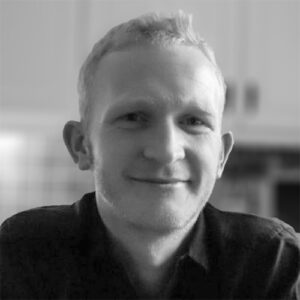
Dr. Rob Ross
Technological University Dublin and Adapt Research Center
Dr. Ross holds a PhD in Situated Dialogue Systems for the University of Bremen in Germany, as well as an MSc and BSc in Computer Science & Experimental Physics from University College Dublin. Dr. Ross teaches courses on Deep Learning and Machine Learning methods as well as Advanced Topics in Computational Intelligence.

Dr. Ulf Schönermarck
Ludwig-Maximilians-Universität Klinikum München
Dr. Schönermarck is a Nephrologist at the University Hospital Munich, Germany. His clinical and research interests focus on diagnosis, treatment and outcome of systemic diseases with renal involvement including ANCA-associated vasculitides and thrombotic microangiopathies. He is also interested in improving clinical collaboration with laboratory medicine and pharmacology.

Prof. dr. Onno Teng
Leiden University Medical Center – The Netherlands
Prof. Teng is head of the Leiden outpatient clinic for Lupus, Vasculitis and Complement-mediated Systemic diseases (LuVaCs) which accommodates top-referral, multidisciplinary, tertiary care on a regional and national level. He has recently been appointed as the European coordinator for rare autoimmune diseases within ERN RITA and Stream Lead for Autoimmune/Vasculitis.
Organising committee

Peter Verhoeven
Vasculitis International
Peter is the president and co-founder of Vasculitis International . He led the Dutch vasculitis patient organisation for 18 years and was the co-founder of RIPAG the patient group within ERN-RITA . He is a co-author of the “EULAR recommendations for the management of AAV – 2022 Update” and the recently published article “Challenges in the diagnosis, classification and prognosis of AAV.”

Dr. Zdenka Hruskova
General University Hospital in Prague
Dr. Hruskova is the deputy head of the nephrology department of the Charles University Hospital in Prague. She is very active in international research regarding vasculitis and international projects like FAIRVASC. She and her supervisor Prof. Tesar played a pivotal role in establishing the Czech patient organization earlier this year.

Inge Linn - Mes
Vasculitis International and Vasculitis Stichting NL
Inge is a member of the Vasculitis International Legal Board and writes columns for Vascuzine, the magazine of the Dutch Vasculitis Patient Group: Vasculitis Stichting.

Katerina Krbcová
Vaskulitida.cz
Katerina is the president of the Czech patient organisation VASKULITIDA.CZ
This event was made possible by the kind support of


